
Will My Baby’s Eye Color Change? A PNP Mom’s Guide to Newborn Vision in the First Year
Apr 27, 2026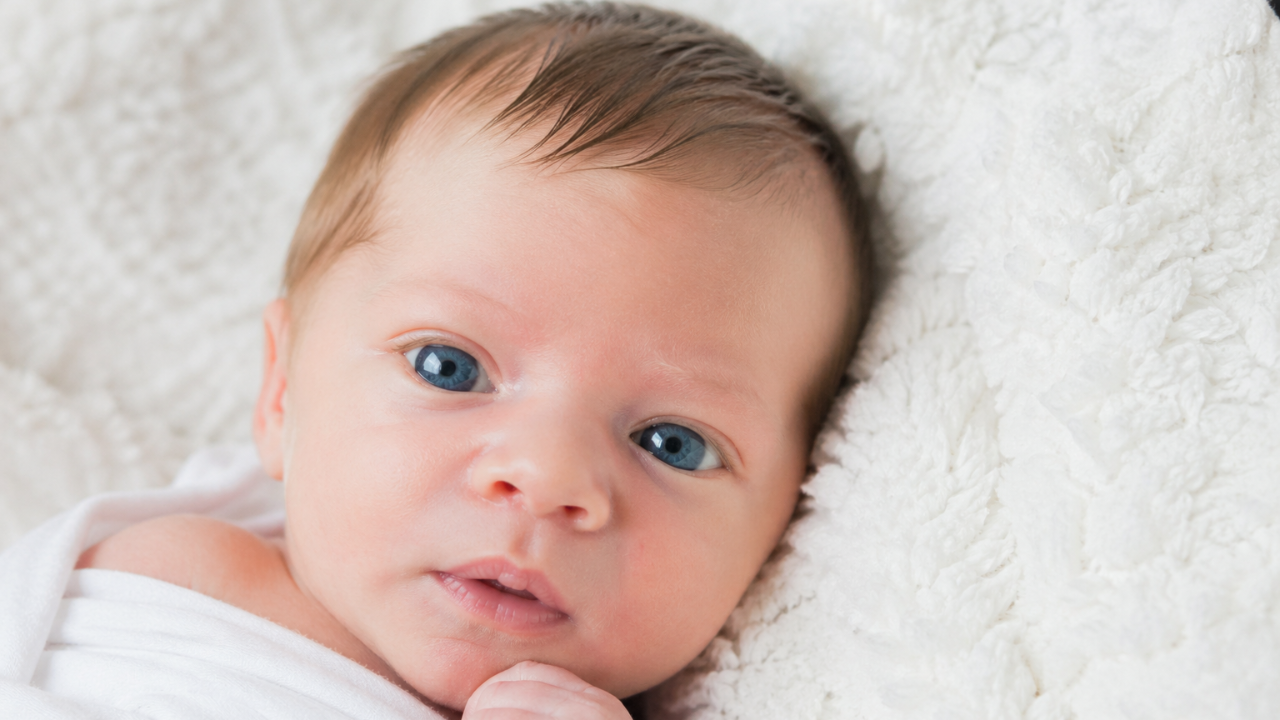
When my firstborn came home from the hospital, she had the most stunning bright blue eyes. I have a photo of her at 6 months old - big, clear, sky-blue eyes staring back at the camera - and I remember thinking, "Are these here to stay?" As a PNP, I knew the answer was “maybe not.” As a mom, I was just excited to watch and wait. (Spoiler: they changed.)
If you’re in that same season of wondering, this post is for you. Let’s talk about what’s actually happening with your baby’s eyes in the first year: the vision milestones, the eye color mystery, and when to give your pediatrician a call.
The Eye Color Question Everyone Is Asking
Here’s the short science: eye color comes down to melanin, the same pigment responsible for skin and hair color. Babies, especially those of lighter-skinned ancestry, are often born with very little melanin in their irises. That’s why so many newborns start out with blue or gray eyes. Over the first several months, as melanin production increases and light continues to interact with the iris, eye color can shift - sometimes dramatically.
Most of that change happens between 6 and 12 months, and eyes typically settle into their permanent color around 9 months, though it’s not unusual to see subtle shifts even into toddlerhood. Darker-skinned babies tend to be born with more melanin already present, so their eyes are more likely to be dark brown from the start and stay that way.
The bottom line for parents: don’t pick your nursery accent colors based on those newborn eyes just yet.
A Quick Look at Vision Development, Month by Month
Eye color is fun to track, but vision development is where things get really fascinating. Here’s a simple roadmap of what your baby is seeing and doing:
Newborn – 1 Month: Your baby can see light, shadows, and large shapes, but their central vision is still developing. They’re most interested in what’s right in front of them - about 8 to 12 inches away, which is basically the distance to your face while feeding. Perfect design, right?
2 – 4 Months: Eyes start working together more consistently. You might notice some occasional crossing or wandering early on - usually normal as the visual system matures. By 3 months, your baby should be tracking moving objects with both eyes and may even try to bat at things nearby.
5 – 8 Months: Depth perception kicks in around 5 months, meaning your baby is now seeing the world in 3D. Color vision is becoming more refined. This is also when many babies start recognizing a familiar face across the room and flashing that heart-melting smile.
9 – 12 Months: Distance judgment is much more accurate now, which is why babies this age can pick up a Cheerio with two fingers like it’s their full-time job. And yes, by around 9 months, those eyes are likely close to their final color.
🚩 Red Flags: When to Call Your Doctor
Most of what you’ll see in the first year is completely normal variation. But here are signs worth bringing up at your next visit, or calling sooner if you’re concerned:
• One eye consistently turns inward or outward after 3–4 months. Occasional crossing before that is normal; persistent turning is not.
• Eyes that appear cloudy or have a white or grayish pupil. This should be evaluated promptly.
• Significant asymmetry in eye color (one eye a very different color than the other). This can occasionally be associated with certain conditions and is worth mentioning.
• No tracking of moving objects by 3 months. If your baby isn’t following your face or a toy with their eyes, let your provider know.
• Excessive tearing or eye discharge beyond the newborn period, which may indicate a blocked tear duct or infection.
• Light sensitivity that seems extreme or eyes that flutter or move involuntarily.
Your pediatrician will screen your baby’s vision at every well-child visit - one of many great reasons to keep those appointments.
The Bottom Line
Your baby’s first year is a whirlwind of firsts, and their visual world is expanding just as fast as everything else. That eye color you’re obsessing over? Give it time - it may surprise you. And those little eyes doing all the hard work of learning to focus, track, and see in three dimensions? They’re doing something pretty remarkable.
As both a nurse practitioner and a mom who saved way too many “what color will they be?!” photos, I promise the waiting and watching is part of the fun. If you want to feel just as prepared for everything else coming your way - from newborn care, feeding, sleep, and postpartum mental wellness - my New Parent Prep class walks you through it all, step by step.
As always, if you have any concerns about your baby’s vision or eye development, trust your gut and reach out to your pediatrician or PNP. You know your baby best.
Reference:
American Academy of Ophthalmology. (2024, July 12). Vision development: Newborn to 12 months. https://www.aao.org/eye-health/tips-prevention/baby-vision-development-first-year
Author