Sleep Deprivation Is a Safety Issue Too: What Expecting Parents Need to Know About Infant Sleep and Mental Health
Apr 22, 2026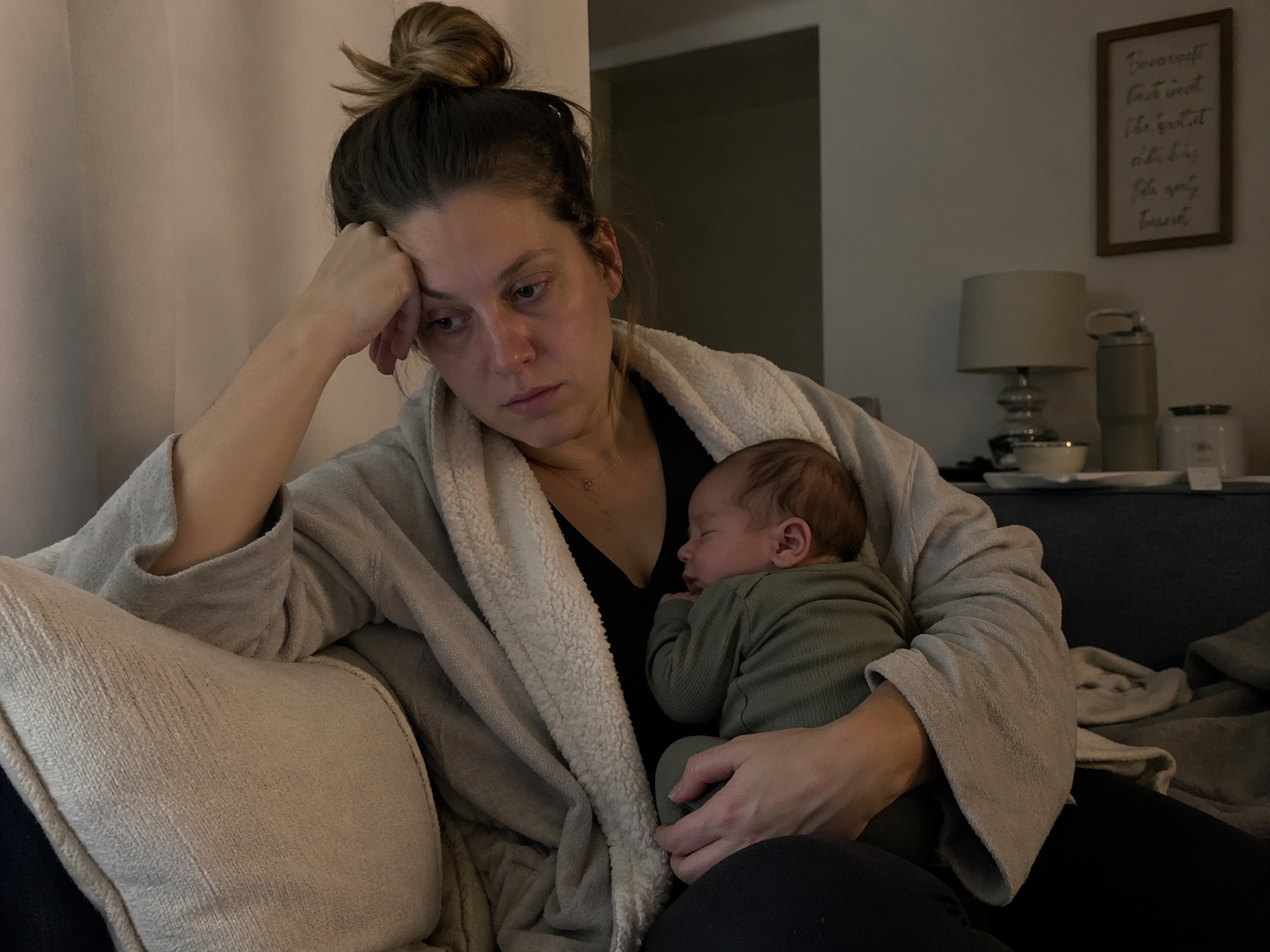
This is the third post in a series on infant sleep. For parts one & two, see HERE and HERE.
If you’re new here, I’m a pediatric nurse practitioner and a mom of two, and I write about the things I wish someone had told me before I lived them.
Nobody Warned Me About This Part
When I was expecting my first baby, I prepared for sleep deprivation the way most first-time parents do: intellectually. I knew it was coming. I’d cared for enough new families to understand it wouldn’t be easy. What I didn’t understand was what sustained, cumulative sleep loss would actually do to me as a functioning person. How it would affect my mood, my decision-making, my sense of self.
I also didn’t anticipate the anxiety. The kind that has you checking the monitor every few minutes. Lying awake after the baby finally sleeps because your nervous system has forgotten how to stand down. Catastrophizing in the dark about things you can’t control.
If you’re expecting and reading this, I want to give you something I didn’t have: an honest heads-up and a real framework for recognizing when what you’re experiencing goes beyond normal new-parent exhaustion.
Sleep Deprivation Is Not Just Uncomfortable - It’s a Clinical Issue
Let’s be direct about what sleep deprivation actually does to the human brain and body, because I think we undersell it significantly in prenatal conversations. Chronic sleep loss, even at the level typical of early new parenthood, impairs cognitive function in ways comparable to being mildly intoxicated. Reaction time slows. Decision-making becomes less reliable. Emotional regulation deteriorates. The things that make you a capable, present parent are the exact things sleep deprivation chips away at first.
For new mothers specifically, sleep disruption is also deeply intertwined with postpartum mood. Sleep deprivation doesn’t cause postpartum depression or anxiety on its own, but it is one of the most significant contributing factors, and it can both mask and amplify symptoms. A mother who is struggling to bond, feeling hopeless, or experiencing intrusive anxious thoughts may be dismissed, by others and by herself, as simply tired. Sometimes she is. Sometimes, something more is happening.
This matters because the window for early intervention is real. The sooner postpartum mood disorders are identified, the more effectively they can be treated.
The SIDS Anxiety Nobody Talks About
I want to name something specifically, because it came up in my own experience and I hear it constantly from families: SIDS-related anxiety in new parents is extraordinarily common and remarkably under-addressed. We do an enormous amount of work (rightly) to educate parents about safe sleep. What we do less well is prepare them for the psychological weight of that education. When you’ve been told that your baby could die in their sleep, and you are the person responsible for preventing that, and you are doing it alone at 3am on four fragmented hours of sleep - the anxiety that follows is not irrational. It makes complete sense.
But for some parents, that anxiety becomes consuming. Checking the baby so frequently that neither of you sleeps. Inability to let anyone else put the baby down. Intrusive thoughts about something happening that won’t quiet down. This is worth talking to your provider about. It is not weakness. It is a nervous system under genuine stress, and it is treatable.
What to Watch For: A Clinical Framework
As a PNP, I use the Edinburgh Postnatal Depression Scale as a starting point for screening - it’s a validated 10-question tool that captures both depressive and anxious symptoms in the postpartum period. Most providers will administer it at your 6-week visit, but I’d encourage you to ask for it earlier if you’re struggling, and to answer it honestly rather than the way you think you’re supposed to answer it.
Beyond formal screening, here are the signs I tell expecting parents to watch for in themselves, not to alarm you, but so you have language for what you might feel:
Signs that warrant a conversation with your provider:
• Persistent sadness, emptiness, or feeling disconnected from your baby that lasts more than two weeks
• Anxiety that feels uncontrollable or is interfering with your ability to function or sleep even when the baby is sleeping
• Intrusive, unwanted thoughts about harm coming to your baby, especially if they feel distressing and out of character
• Feeling like you’re failing, like your baby would be better off without you, or like you’ve made a terrible mistake
• Rage or irritability that feels disproportionate and frightening
• Inability to eat, care for yourself, or leave the house
Any one of these, persisting, is a reason to reach out. You do not need to have all of them. You do not need to be in crisis to deserve support.
How to Actually Prepare - Before the Baby Arrives
Here is what I wish expecting parents would do now, before sleep deprivation is affecting their judgment:
Identify your support people explicitly. Not vaguely - specifically. Who will come and hold the baby for three hours so you can sleep? Who can you call at 2am when you’re not okay? Have that conversation before you need it.
Talk to your OB or midwife about your mental health history. If you’ve experienced depression, anxiety, or trauma before, your postpartum risk is higher. That’s not a reason to be afraid - it’s a reason to have a plan in place early, including whether medication prophylaxis makes sense for you.
Make a night feeding plan with your partner. If you’re breastfeeding, this looks different than if you’re formula feeding - but either way, discuss how nights will work before you’re both delirious. Even one 4-5 hour protected sleep stretch can meaningfully change how a parent functions.
Know your provider’s after-hours protocol. If you’re struggling at 10pm on a Saturday, do you know who to call? Where to go? Having that answer before you need it removes one barrier when everything feels impossible.
Lower the bar for asking for help. This is the most important one. The threshold most new parents use for reaching out is far too high. You do not need to be at the end of your rope. Struggling is enough. Tired and not okay is enough.
One More Thing
I’ve said this before and I’ll keep saying it: sleep deprivation in new parents is a safety issue. Not just for parents, for babies too. An exhausted caregiver makes different decisions than a rested one. Falls asleep in unsafe places. Misses cues. Struggles to respond.
When we treat parental sleep as a luxury or a complaint rather than a clinical variable, we miss something important. Your mental health and your sleep are not separate from your baby’s well-being. They are part of it.
You are allowed to take that seriously. I hope someone tells you that before you need to hear it at 3am.
If you want a structured way to work through all of this before your baby arrives, my New Parent Prep Class was built exactly for this, covering postpartum mental health, sleep, feeding, partner alignment, and 1:1 support from me in one place.
Resources
• Edinburgh Postnatal Depression Scale - ask your provider to administer, or search for the validated public version online
• Postpartum Support International: postpartum.net | Helpline: 1-800-944-4773 - so many (free) resources for families- help finding a clinician in your area, support groups, etc.
• National Maternal Mental Health Hotline: 1-833-943-5746 (call or text, 24/7)
This post is for educational purposes and does not replace individualized medical or mental health care. If you are in crisis, please contact the 988 Suicide and Crisis Lifeline by calling or texting 988.
Author