Why New Moms Feel Seen (and Terrified) When Postpartum Mental Health Makes the News
Aug 25, 2026
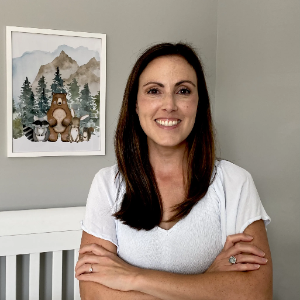
If you’re new here, I’m Alisa- a pediatric nurse practitioner and a mom of two, and I write about the things I wish someone had told me before I lived them.
Every so often, a story breaks that puts postpartum mental health on the national stage. It’s tragic. It’s heartbreaking. And if you’ve had a baby recently, it probably made your stomach drop in a way that had nothing to do with the headline itself.
Here’s the thing: most women don’t see ourselves in the tragedy. We see ourselves in everything that came before it. The exhaustion that didn’t lift. The intrusive thoughts you were too scared to say out loud. The 3am spiral where you wondered if you were the only mother who felt this far from okay. The sense that you were supposed to have this figured out by now, and the quiet terror that you don’t.
That recognition - I have felt some version of that - is the real story. And it’s one we need to talk about honestly, without waiting for a crisis to make headlines.
The System Wasn’t Built to Catch You
If you’ve had a baby, you already know this in your body even if no one ever said it out loud: the postpartum safety net has enormous gaps.
Your OB or midwife, who monitored you weekly in the final stretch of pregnancy, largely steps back after birth. The American College of Obstetricians and Gynecologists has actually updated its guidance to recommend contact within the first three weeks postpartum and a comprehensive visit within twelve - a real improvement on the old measly six-week check. But guidance and lived reality are different things. Many practices still default to one visit around six weeks, and that visit is often fifteen to twenty minutes long, trying to cover healing, bleeding, contraception, feeding, and your mental health, all at once.
Then there’s your pediatrician, whose job (rightly) is your baby. At well-checks, they may hand you a screening questionnaire for postpartum depression, and that screening matters. But a fifteen-minute appointment built around your infant’s growth curve was never designed to hold a real conversation about how you’re doing. A checked box isn’t the same as being seen.
And if a screening does flag something? That’s often where the real wall shows up. Is your provider actually prepared and resourced to guide you through next steps? Therapy is expensive, frequently not covered, or covered so scarcely it might as well not be. Psychiatry waitlists for new patients can stretch six weeks or more in a lot of places. Six weeks is an eternity when you’re barely making it through a day, let alone finding childcare and energy to sit through an intake appointment.
So you’re left with a system that screens for the problem without reliably building a bridge to the solution. That’s not a personal failure. That’s a structural one.
What We Actually See Ourselves In
We don’t see ourselves in the worst-case outcomes we read about in the news. We see ourselves in the in-between: the version of motherhood nobody put on the registry checklist. Feeling profoundly lost inside a role you were "supposed" to instinctively know how to do. Loving your baby fiercely and still feeling like you’re drowning. Not recognizing yourself in the mirror, emotionally or otherwise. Wondering who you can even say that to.
This is the part of matrescence - the identity shift into motherhood - that isn't talked about enough. It’s not a character flaw. It’s what happens when a massive physiological, hormonal, and identity transformation collides with a support system that was never built to hold it.
If any of this sounds like you right now, please hear this clearly: you are not broken, you are not alone, and you do not have to wait for a scheduled appointment to ask for help.
We Lost Our Village, and We’re Paying for It
Underneath the appointment gaps and the waitlists is something even bigger: we’ve largely lost the village. For most of human history, new mothers were never left alone with a newborn to figure it out. There were aunts, grandmothers, neighbors, and elders nearby. People who cooked, held the baby so you could sleep, and simply knew what the fourth trimester looked like because they’d lived it themselves or watched it a dozen times over.
Today, many of us are raising babies far from extended family, in isolated homes, on a culture-wide script that says you should be able to do this on your own - quietly, capably, and without too much complaining. That disconnection isn’t a footnote to the postpartum mental health crisis. It’s one of its root causes. A system with gaps in medical follow-up is hard enough. A system with gaps in medical follow-up and no village to catch what falls through is what actually breaks people.
This is why rebuilding some version of a village, even a small one, is one of the most protective things you can do for your postpartum mental health, right alongside knowing your resources.
You Deserve Support Before You’re in Crisis
Preparing for postpartum mental health shouldn’t be an afterthought. It should be part of how we prepare for birth in the first place, right alongside registries and nursery colors. Knowing where to turn before you need it can make all the difference in an overwhelming moment.
If you need support, these are some firstline resources:
- Postpartum Support International (PSI) HelpLine: Call or text 1-800-944-4773 for free, confidential support, screening, and local resource referrals for perinatal mood and anxiety disorders. PSI also offers free weekly virtual support groups at postpartum.net.
- National Maternal Mental Health Hotline: Call or text 1-833-TLC-MAMA (1-833-852-6262) for free, 24/7, confidential support in English and Spanish.
- 988 Suicide & Crisis Lifeline: Call or text 988 anytime, day or night, if you are in crisis or having thoughts of harming yourself or your baby.
- Crisis Text Line: Text HOME to 741741 to connect with a trained crisis counselor.
- Your OB, midwife, or pediatrician’s office: You can call between appointments. You do not need to wait for a scheduled visit to say you’re struggling.
If you’re pregnant or expecting, know that preparing for the emotional realities of the fourth trimester - not just the physical ones - is one of the most protective things you can do for yourself. You deserve a village. If you don’t have one yet, building one starts now.
This is exactly why I built mental health preparation directly into my New Parent Prep Class. Alongside birth recovery, newborn basics, safe sleep, feeding, and partnership, we talk honestly about what the emotional and psychological reality of the fourth trimester actually looks like - before you’re in it, not after. Because the best time to learn where to turn for support isn’t in the middle of a 3am spiral. It’s now, while you still have the bandwidth to build the plan.
Author