
What to Expect the First Week With a Newborn (From a Pediatric NP Who Learned the Hard Way)
Mar 29, 2026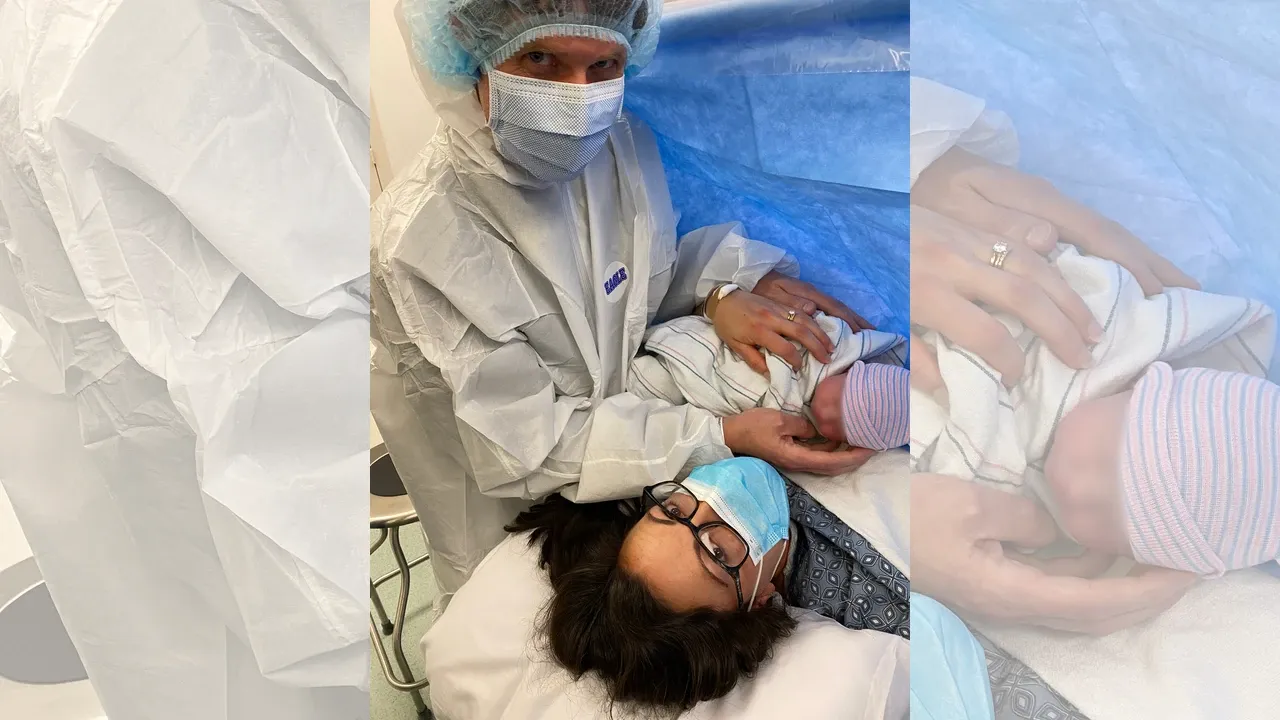
I’m a pediatric nurse practitioner with over 14 years of experience helping new parents navigate the newborn phase. I’ve sat across from exhausted, overwhelmed, and completely in-love first-time parents in that first week. And I still walked into my own first week of parenthood completely unprepared for what actually mattered.
We spent months focused on the registry. We toured the hospital. We took a birth class. But we skipped the breastfeeding class. We hadn’t lined up a lactation consultant. We hadn’t had any real conversations about how we were going to handle the logistics of those first weeks as partners. I leaned on my professional background and figured that would be enough.
Then, at the end of my pregnancy, complications arose. My daughter was born via urgent C-section. And nothing - not my nursing degree, not my years of experience - had prepared me for that procedure or that recovery.
That experience changed how I talk to parents. Because if it can happen to me, it can happen to anyone. And the solution isn’t to be fearless, it’s to be prepared.
The Biggest Mistake First-Time Parents Make
The most common thing I see walking into that first week is what I call the “wing it” mindset - a general attitude of "We’ll figure it out as we go, how hard can it be?"
And here’s the thing: flexibility is genuinely important in that first week. Your baby didn’t read the books, and things will not go exactly as planned. But there is a massive difference between being flexible and being unprepared. One is an approach. The other is an absence of one.
Parents who do even a little preparation ahead of time: who have the conversations, who know what to expect, who have supports lined up - walk into that first week feeling less like a deer in headlights and more like they have a foundation to stand on. That confidence matters more than you know when you’re running on no sleep at 3am and your baby won’t stop crying.
The Conversations You Need to Have Before Baby Arrives
This is the piece most couples skip entirely. You plan the nursery, you pack the hospital bag, and then you just… show up. But a few honest conversations ahead of time can completely change the dynamic of that first week.
Here’s what to talk through:
Visitors and family help. What kind of support do you actually want after birth? When do you want family to come, how long do you want them to stay, and - this one is important - what specific tasks do you want them to help with? “Come help” is vague. “Can you handle dinner and laundry for the first three days?” is a plan.
Overnight logistics. Are you splitting overnight duties? Is dad taking the lead while mom recovers from birth? How will you handle the nights when you’re both running on empty? Talk through this before you’re both exhausted and trying to negotiate at 2am.
Sleep deprivation. Related but worth its own conversation: how will you take turns napping during the day? Who taps out when? Having even a loose system here prevents a lot of resentment.
Feeding goals. Are you hoping to exclusively breastfeed, exclusively formula feed, or a combination? If you’re planning to breastfeed, what supports do you have in place? Before your due date, take five minutes to find a lactation consultant in your area and save their number. You may never need to call- but if day three hits hard, you'll be so glad it's already in your phone. This was my own blind spot, and I see it constantly.
A meal train or grocery help. Do you want one? Who’s organizing it? Food is one of the easiest things for people in your life to help with, and one of the easiest things to forget to arrange.
What a Realistic Day One Actually Looks Like
Let me paint you an honest picture, because what you see on social media and what actually happens are two very different things.
You walk through the door. You’re home. You look at each other. And then it hits you - it’s just the two of you now. No nurses. No call button. Just you, your partner, and this tiny human who needs everything from you. That moment is completely normal, incredibly universal, and honestly? A little bit beautiful, even when it feels terrifying.
And then the dust starts to settle in the most literal sense. You’re remembering where you put all the newborn gear. Which drawer has the diapers. Where you stashed the extra swaddles. You’re coming back to your house and recalibrating to it with a completely new lens.
Meanwhile, you are recovering from birth. Whether that was a vaginal delivery or a C-section, your body has just done something extraordinary, and it needs time and gentleness. This is not the week to push through.
Your newborn will be eating very frequently, typically every one to three hours, and sleeping a lot in between. That means a huge amount of your day is hands-on time: feeding, holding, soothing, changing, and then starting over again. The question "What do we do now?" will come up more than you expect, and that’s completely okay. You don’t need to have the answer. You just need to take it one feed at a time.
The Emotional Reality of Week One
Nobody tells you enough about this part. So let me be honest with you.
Up to 80% of new mothers experience some form of the baby blues in that first week. Hormones shift dramatically after birth, and it is completely normal to feel weepy, overwhelmed, or emotionally raw even when things are going well. Baby blues typically resolve on their own within the first two weeks. If feelings of sadness or anxiety persist or worsen beyond that, please reach out to your provider - that’s when we start looking into postpartum depression or anxiety, which is also common and very treatable.
But baby blues are just one layer. Week one is also filled with the most profound, life-changing love you may have ever felt. And self-doubt. And the strange experience of learning something completely new while being completely exhausted. Newborn crying can feel overwhelming when you don’t yet know what each cry means - and you won’t yet, and that’s okay. You will learn your baby. It just takes a little time.
There’s also a real shift happening in your partnership. The dynamic between you and your partner changes the moment you bring a baby home. If your birth experience was smooth, that shift can feel exciting. If there was urgency, fear, or trauma involved - as there was in mine - those emotions don’t disappear just because you’re home now. Be gentle with each other. Keep talking.
Is This Normal? Your Most Common Week One Questions - Answered
My breastfed baby wants to nurse every hour. Is that normal?
Yes. In the first days of life, your newborn’s stomach is roughly the size of a cherry. It grows each day, but it can only hold so much at a time. Add in the fact that your milk begins as colostrum - a powerful, nutrient-dense first milk that is lower in calories per ounce than formula - and frequent nursing is not just normal, it’s exactly what your baby needs. Breastfed newborns typically nurse every one to three hours, especially in that first week.
How often should my newborn be having dirty diapers?
In the first few days, stools will be dark and tarry - that’s meconium, and it’s normal. As your milk transitions from that initial colostrum to true breastmilk, stools transition to a mustard yellow, seedy consistency for breastfed babies. Frequency varies widely and is usually less important than whether baby is producing wet diapers and gaining weight. Your pediatrician will track this closely in those first visits.
My baby has a rash / peeling skin / little white bumps on their nose. Normal?
Very often, yes. Newborn skin goes through a lot in that first week. Peeling, milia (those tiny white bumps), and newborn acne are all common and typically resolve on their own. When in doubt, ask your pediatrician - that’s what they’re there for.
Practical Tips That Actually Help
Go beyond “sleep when the baby sleeps”. Here’s what actually makes a difference:
Approach it as a team. This is the single biggest thing. You are not two individuals surviving in the same house - you are partners figuring this out together. Check in with each other. Ask what the other person needs. Assume good intent when emotions run high.
Keep communication open. The first week is not the time to white-knuckle through your feelings. If you’re struggling, say so. If you need a break, ask for one. Silence builds resentment fast when you’re sleep deprived.
Let yourself recover. This one especially goes out to mom. Resist the urge to bounce back quickly. Your body needs rest, nourishment, and gentleness.
Let things go slowly. You do not need to have a routine locked in by day five. You do not need to have figured out the perfect swaddle or the perfect feeding schedule. Give yourself the grace of figuring it out gradually.
Take it in. I know that sounds impossible when you’re exhausted and overwhelmed. But this season goes fast. Pull your phone out when you walk through that door for the first time. Capture it. Sit with it for a moment when you can. You’ll want those memories.
You’re Not Supposed to Have It All Figured Out
Here’s the thing nobody says loudly enough: you are not going to walk into that first week knowing exactly what to do. Nobody does. Not first-time parents, not experienced parents, and - as I learned - not even pediatric nurse practitioners who have spent over a decade helping other families do exactly this.
What you will do is figure it out. Together. One feeding, one diaper, one exhausted middle-of-the-night moment at a time. And that is exactly what you are supposed to do.
Preparation doesn’t mean having all the answers. It means walking in with a foundation - some conversations had, some supports lined up, some realistic expectations set - so that when the hard moments come, you’re not starting from zero.
You’ve got this. More than you know. 🤍
Author