Who Told You That? Replacing the lies we carry with the truth of who God says we are
Jun 11, 2026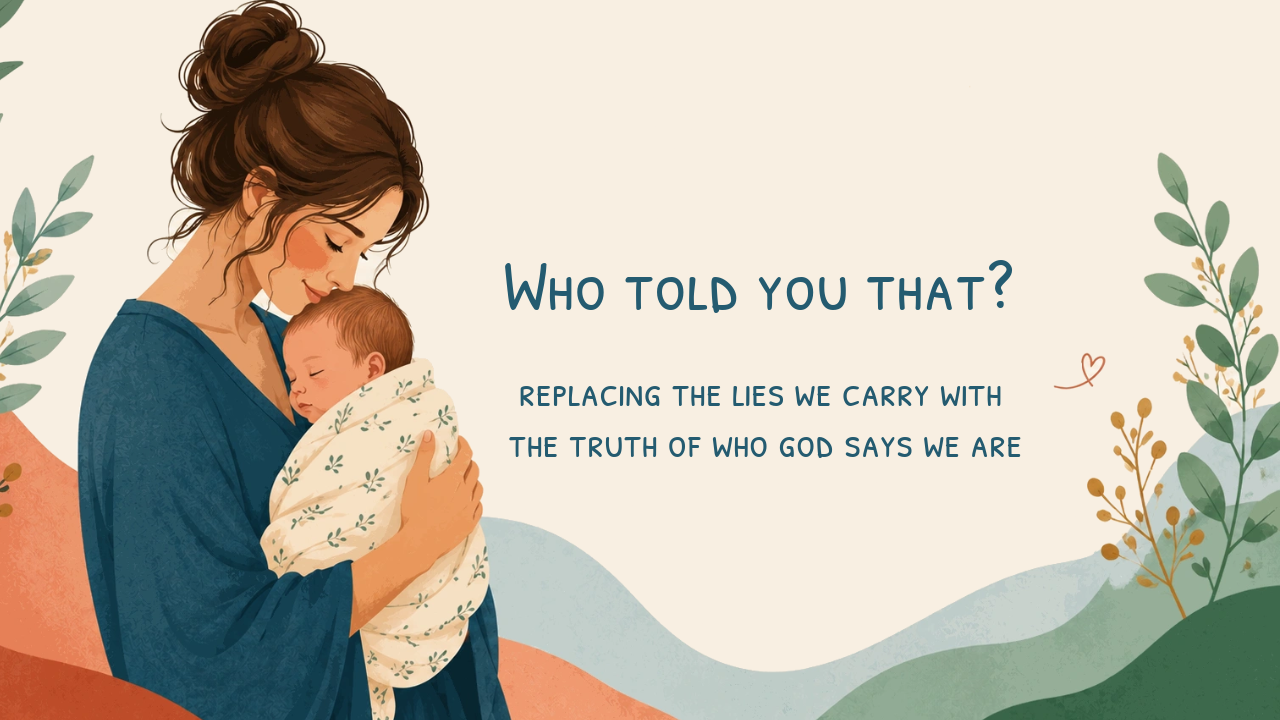
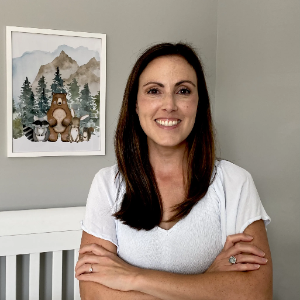
If you’re new here, I’m Alisa- a pediatric nurse practitioner and a mom of two, and I write about the things I wish someone had told me before I lived them.
There's a question God asks in the Garden of Eden that I can't stop thinking about.
Adam and Eve have just eaten the fruit. Their eyes are opened, shame rushes in, and they hide. Then God - who is all-knowing, who sees everything, who already knows exactly what happened - walks through the garden and calls out to them. Not with a gavel. Not with a verdict. With a question.
"Where are you?" (Genesis 3:9)
And then, when Adam explains that he hid because he was naked and afraid, God asks a second question that I think is meant for every one of us:
"Who told you that you were naked?" (Genesis 3:11)
Who told you that?
The Serpent Was Crafty
Go back a few verses and notice something. Genesis 3:1 tells us the serpent was "more crafty than any other beast of the field." Crafty. Cunning. He didn't come at Eve with an obvious lie. He came with a question - "Did God actually say…?" - just subtle enough to create doubt, just reasonable enough to sound like it might be worth entertaining.
The fruit looked good. It seemed wise. It didn't inherently look like destruction. And one small shift in what she believed about God's word led to a moment that changed everything.
Here's what I want you to see: the enemy didn't need a loud lie. He just needed a quiet one. A small reframe. A seed of doubt planted in just the right place.
He's still doing that today.
What Motherhood Uncovers
New motherhood has a way of excavating things in us we didn't even know were there. The exhaustion strips away the old coping mechanisms. The identity shift shakes loose the foundations we were standing on without realizing it. The hard moments - the ones where we feel like we're failing, where we snap and then spiral, where we compare ourselves to everyone around us - those moments have a way of surfacing beliefs about ourselves that we picked up somewhere along the way.
Maybe through something someone said to you. Maybe through a relationship. A season of failure. A childhood wound that never fully healed. Maybe you don't even know where it came from. You just know that the voice is there, and it's loud, and it says things like:
I'm failing. I'm not enough. God must be disappointed in me. I'm too much of this and not enough of that.
Can I ask you something?
Who told you that?
Because not every voice in your head is the voice of God.
Shame Sends Us Into Hiding
When Adam and Eve's eyes were opened and they realized they were naked, they didn't run toward God. They ran away and covered themselves. Shame does that… it makes us want to hide, from God, from others, from ourselves.
And here's the thing about hiding: it reinforces the lie. The more we pull away, the louder the shame gets. The more we believe we're too far gone, too much of a mess, too disqualified - the more those beliefs shape how we see ourselves.
But shame was never God's design for you. And the way He responds to Adam and Eve hiding in the garden is the same way He responds to us. He doesn't wait for them to clean themselves up. He doesn't shout condemnation from a distance. He walks toward them and asks where they are.
He moves toward us in our hiding.
What God Actually Says About You
This is where we have to replace what the enemy whispers with what God has already declared.
"For we are his workmanship, created in Christ Jesus for good works, which God prepared beforehand, that we should walk in them." (Ephesians 2:10)
You are not a mistake. You are not a project God is frustrated with. You are His workmanship - His masterpiece - created with intention and purpose.
"There is therefore now no condemnation for those who are in Christ Jesus." (Romans 8:1)
No condemnation. Not some condemnation. Not condemnation-unless-you-really-messed-up. None.
"But he said to me, 'My grace is sufficient for you, for my power is made perfect in weakness.'" (2 Corinthians 12:9)
The places where you feel the most inadequate as a mom - those are the exact places God's power shows up most fully. Your weakness is not disqualifying. It's an invitation.
"O Lord, you have searched me and known me! You know when I sit down and rise up; you perceive my thoughts from afar… For you formed my inward parts; you knitted me together in my mother's womb. I praise you, for I am fearfully and wonderfully made." (Psalm 139:1–2, 13–14)
He knows everything about you - every flaw, every failure, every hidden corner - and His response is not disappointment. It's: I made you, and it was on purpose.
Your Identity Is Received, Not Earned
Here's what I want to leave you with: you cannot perform your way into what God has already given you.
You don't become enough by doing more. You don't earn God's delight by being a better mom this week than you were last week. Your identity in Him is not contingent on your output. It is received - freely, fully, by grace.
The next time that voice shows up - the one that says you're failing, you're too much, you're not enough, God must be so tired of you… I want you to pause and ask yourself one question.
Who told me that?
Because it wasn't God.
A Prayer Prompt
Take a few quiet minutes and ask God honestly:
Lord, where in my life am I hearing voices that aren't coming from You - voices of shame, condemnation, and not-enoughness? And how do You want me to see myself differently from what those messages have told me?
Then sit and listen. You might be surprised what He says.
If you're in a season of building your identity as a new mom and want to walk into parenthood feeling prepared and supported, I'd love for you to check out the New Parent Prep Class. Because you don't have to figure this out alone.
Author