You Won’t Just Know When Something Is Wrong Postpartum
May 21, 2026
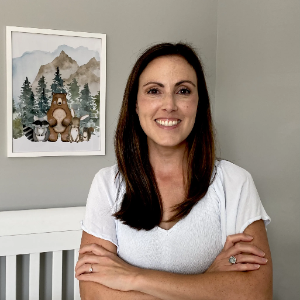
If you’re new here, I’m Alisa- a pediatric nurse practitioner and a mom of two, and I write about the things I wish someone had told me before I lived them.
Most pregnant moms assume that if something is wrong after birth, they’ll just know. They picture the warning signs as obvious: crying all the time, unable to get out of bed, clearly struggling. But postpartum mental health conditions are rarely that straightforward. And when you don’t know what you’re actually looking for, you can end up suffering in silence for months, convinced it’s just part of motherhood.
It doesn’t have to be that way.
The Reality of Perinatal Mental Health
According to Postpartum Support International, 1 in 5 to 7 women experience some form of perinatal mental health condition. That means in any given mom group, birth class, or hospital waiting room - someone has been affected. And most of them don’t realize what’s happening until they’re already deep in it.
The two most common conditions are postpartum depression (PPD) and postpartum anxiety (PPA), and both show up very differently than most people expect.
Postpartum depression isn’t always crying on the bathroom floor. It can look like:
• Feeling emotionally numb or disconnected from your baby
• Irritability or rage that feels out of proportion
• Difficulty experiencing joy in things you used to love
• Feeling like you’re going through the motions- functional on the outside, hollow on the inside
• Guilt, shame, or the persistent feeling that you’re not a good enough mom
Postpartum anxiety can be even easier to miss, especially for high-achieving, high-functioning moms. It can look like:
• Racing thoughts that won’t turn off, especially at night
• Constant worry about your baby’s health or safety, even when everything is fine
• Feeling on edge, restless, or unable to relax even when you have the chance
• Physical symptoms like a tight chest, nausea, or heart palpitations
• Needing to control every detail because the uncertainty feels unbearable
It’s also worth knowing that postpartum OCD, postpartum PTSD, and in rarer cases, postpartum psychosis exist on this spectrum. PPD and PPA are by far the most common, and all of these conditions deserve far more conversation than they get.
The Myths That Keep Moms Suffering Longer
Myth #1: “I’ll white-knuckle it. It’ll pass.”
The baby blues, that wave of emotion and tearfulness in the first one to two weeks, is normal and does pass. But postpartum depression and anxiety don’t follow that same timeline. And while they are common and treatable, pushing through without support doesn’t make them resolve faster. It just makes the suffering quieter.
Myth #2: “It’s been more than 12 weeks, so I’m probably fine.”
This is one of the most important things I want you to hear: postpartum mental health conditions can develop any time within the first year after birth. Symptoms don’t have an expiration date. If something feels off at four months, six months, or ten months postpartum... that still counts. You still deserve support.
My Story
When my daughter was almost six months old, I started noticing that something felt off. From the outside, everything looked fine. I was functioning. I was showing up. But inside, I didn’t feel like myself, and I couldn’t explain it.
As a healthcare provider, I knew the clinical side of postpartum mental health. And still, I blew off my symptoms. I told myself I was fine. I kept pushing through the way moms do: putting my head down, taking care of my family, ignoring what was quietly building underneath.
It wasn’t until I talked to people who were deeply experienced in postpartum mental health that I finally understood what was going on. And that clarity changed everything.
Going through my own postpartum experience taught me something I now carry into every new parent interaction: taking care of yourself isn’t separate from taking care of your children. It is taking care of your children. You cannot pour from empty.
Partners Aren’t Immune Either
This part often surprises people, but it’s important. Research shows that 1 in 10 fathers also experience a perinatal mental health condition. For dads, it can show up as withdrawal, irritability, increased anxiety, or feeling disconnected from the family.
Partners can support a mom experiencing PPD or PPA by:
• Taking her seriously when she says something doesn’t feel right, even if she seems functional
• Removing barriers to her getting help (childcare, appointments, logistics)
• Not minimizing her experience with “just focus on the positive”
• Gently encouraging professional support without making her feel broken
• Checking in on their own mental health too
The whole family’s wellbeing matters. And normalizing the conversation of how you're both going to check in and support one another starts before the baby comes home.
You Don’t Have to Figure This Out Alone
Imagine walking into the postpartum season knowing what’s normal, what to watch for, and exactly when to reach out. No fear. No confusion. Just clarity and confidence.
That’s exactly what I cover in my New Parent Prep class. Because preparing for birth is important. But preparing for after birth - emotionally, mentally, and practically - is what actually changes how you experience early motherhood.
If this resonated with you, I’d love to personally connect and show you how I can help you feel ready for all of it.
You deserve support. And so does the woman you’re becoming on the other side of birth.
More on postpartum preparation:
- You Prepared for Birth. But Did You Prepare for After?
- The Conversation You're Not Having (But Should Be Before Baby Arrives)
- What to Expect the First Week With a Newborn (From a Pediatric NP Who Learned the Hard Way)
Author