The Safe Sleep 7 & Breastsleeping: What I Know as a PNP - and What I Learned as a Mom
Apr 20, 2026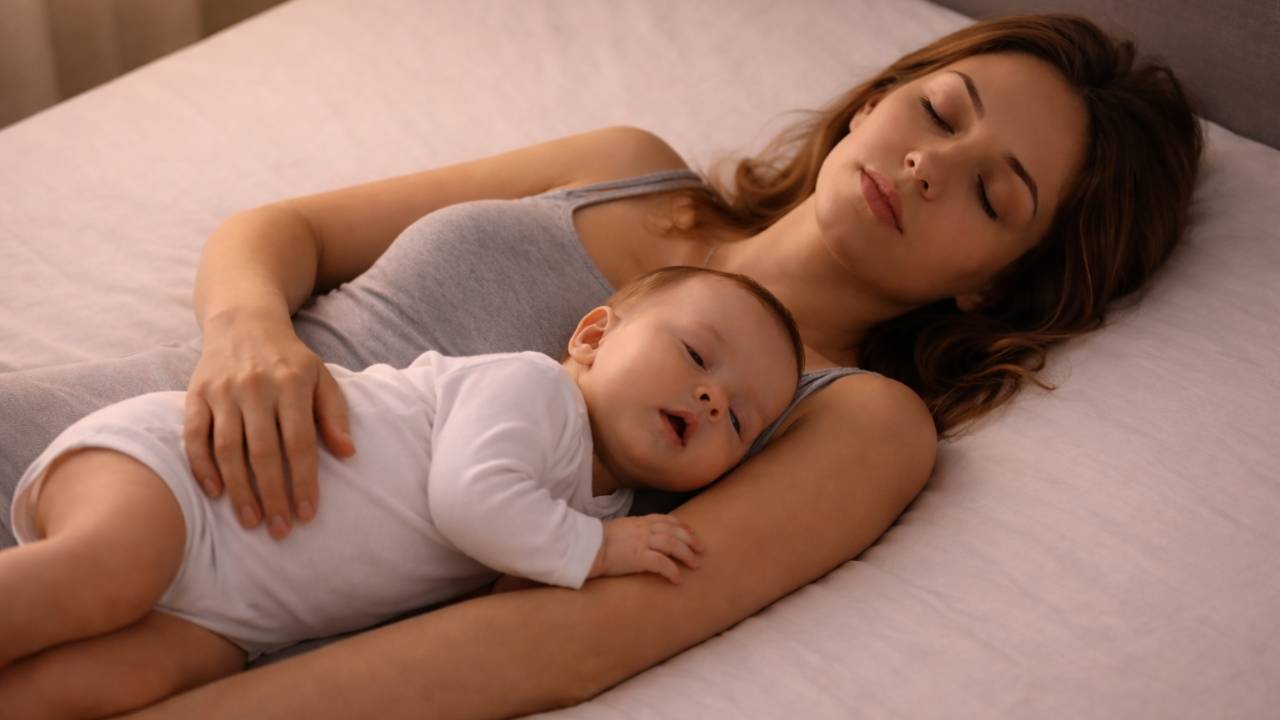
This is Part 2 of a series on newborn sleep. If you missed Part 1, I shared why the co-sleeping conversation deserves more nuance than a simple yes or no. This post goes deeper - into a framework called the Safe Sleep 7, the science of breastsleeping, and the decision I made with my own second baby.
My First Baby Taught Me the Rules. My Second Taught Me Something Else.
With my first, we did everything by the book. Firm mattress, swaddled, bassinet beside the bed, back to sleep every time. I’m proud of that, and I’d make the same choices again. But what I didn’t fully anticipate was the cost of severe sleep deprivation. There were stretches where I was so exhausted it affected my ability to function and my mental health in ways I couldn’t ignore.
When my second arrived, I thought I knew what to expect. What I didn’t expect was a baby who simply would not be put down. We swaddled. We tried every transition trick I’d used or recommended professionally. Nothing changed. He wanted to be close to me, and with a toddler at home and a breastfeeding relationship I desperately wanted to protect, sleep deprivation wasn’t just uncomfortable. It felt dangerous in a different way. I was falling asleep sitting up while nursing - which is among the least safe scenarios that exists for an infant.
It was my lactation consultant who first mentioned Dr. James McKenna and the Mother-Baby Sleep Laboratory at Notre Dame. And that conversation changed everything.
What Is ‘Breastsleeping’?
Dr. McKenna coined the term breastsleeping to describe the specific, observable phenomenon of a breastfeeding mother and baby sleeping together - and to distinguish it from generic bed-sharing, which lumps together very different situations.
His research documents that breastfeeding mother-infant pairs who share a sleep surface develop a synchronized sleep architecture. Mothers sleep more lightly, arouse more frequently, and position themselves protectively around their babies - often without conscious awareness. Babies nurse more, wake more easily, and are more physiologically regulated in close proximity to mom.
This is not just comfort. It is biology.
None of this means bed-sharing is without risk. It absolutely carries risk, and that risk is real. But McKenna’s work argues compellingly that when we study bed-sharing without distinguishing breastfeeding dyads from formula-feeding ones, or sober mothers from impaired ones, we miss critical variables. The data becomes blunt when the situation is nuanced.
The Safe Sleep 7
The Safe Sleep 7 is a harm reduction framework developed by La Leche League to help breastfeeding families who choose to bed-share do so as safely as possible. It is not an AAP-endorsed guideline. I want to be clear about that. The AAP recommends against bed-sharing, and those recommendations are grounded in real safety data that I take seriously and share with every family.
What the Safe Sleep 7 offers is a framework for the families who are going to bedshare regardless - and there are many- to understand which factors most meaningfully reduce risk.
The seven conditions are:
1. Non-smoking household - prenatal and postnatal smoke exposure is one of the strongest risk factors for sleep-related infant death
2. Sober adults - no alcohol, sedating medications, or substances that impair arousal
3. Baby is healthy and full-term - premature or low-birthweight infants carry higher baseline risk
4. Baby is breastfed - the breastsleeping dynamic depends on a nursing relationship, as both mother and infant have been shown to be more easily arousable
5. Baby is on their back - same as any sleep environment
6. Baby is lightly dressed, not overbundled - temperature regulation matters
7. Safe surface - firm mattress, no soft bedding, pillows away from baby, never a couch or recliner
The more of these conditions are met, the more the risk profile shifts. The fewer that are met, the more caution is warranted. It is a spectrum, not a pass/fail.
What We Did in Our Home
Once I understood this framework, something clicked for me, both as a clinician and as a mother. I could see clearly which risk factors applied to us and which didn’t. I was exclusively breastfeeding, sober, a non-smoker. My son was healthy and full-term. We had a firm mattress and I learned how to clear the sleep environment appropriately.
Practicing the Safe Sleep 7 model didn’t feel like throwing out the guidelines. It felt like actually understanding the risk well enough to make an informed decision for our specific family. My son slept. I slept. My mental health was at a healthy place. My milk supply, which proximity was actively supporting, stayed strong.
I’m not telling you this so you’ll do what I did. I’m telling you because you deserve to know that this decision, when made thoughtfully and with full information, is one that a pediatric nurse practitioner made in her own home. And that it looked nothing like falling asleep on the couch with a newborn, which is the risk when you’re sleep deprived and trying to white knuckle through.
The AAP Tension - And Why It’s Worth Sitting With
I want to name this directly: what I’ve described in this post is not what the American Academy of Pediatrics recommends. The AAP advises against bed-sharing, particularly in the first four months, and those guidelines exist because the population-level data supports them.
I share AAP guidelines with every family I see.
What I also do is recognize that guidelines are written for populations, and you are an individual family with a specific baby, a specific home, and a specific set of circumstances. Harm reduction is a legitimate, evidence-informed approach to risk - one used across medicine when abstinence-only messaging fails to meet people where they are.
The families most at risk are often the ones who never got honest information. They end up bedsharing anyway - exhausted, unprepared, on an unsafe surface. That is the outcome I want to prevent.
What To Do With This
If you’re considering bedsharing or already doing it, here’s what I’d encourage:
Talk to your pediatric provider - ideally one who will engage with you honestly rather than just hand you a pamphlet. Assess your own risk factors using the Safe Sleep 7 framework. If you’re formula feeding, have been drinking, smoke, or your baby was premature - the calculus changes significantly. And if you’re falling asleep in unsafe places like chairs or sofas, please know that is the highest-risk scenario of all, and it's worth having a real plan for newborn sleep before you find yourself there.
You deserve information that actually helps you make the safest choice for your family, not just the choice that’s easiest to recommend from a liability standpoint.
This post is for educational purposes and does not replace individualized medical advice. Please discuss your baby’s sleep environment with your pediatric provider.
To continue to part 3 of the series on newborn sleep, click HERE.
Author